
In the new body of work that Michael Selekane (1986-) has produced for his upcoming exhibition at the White River Art Gallery, in Mpumalanga, he has sought to confront memories of his childhood. At first viewing, bereft of the intention of why he has sought to produce and show this body of work, a casual viewing reveals no overarching cohesion amongst the works that can be assumed to bring the body of work together thematically. However, a sensible viewing that considers the context within which the work was produced reveals poignancy delivered through figuration and thick impasto layering.
Whereas Michael Mmutle (1948 – 2010), Selekane’s mentor, though expressive to a certain extent in terms of the mood of his visions, brushstrokes and palette would go almost flat in his paintings, Selekane on the other hand, retains expressiveness captured through free brush strokes. He also goes a step further in pushing the boundaries of layering paint to the point wherein the viewer may feel compelled to touch the surfaces of his canvases. With a career spanning more than a decade and half, Selekane deserves a monographic study to contextualise his contribution to contemporary South African art between the mid-2000s to our present time. While that will be a fulfilling art historical undertaking my intention in the present essay is to reflect on his recent work which will be featured at the White River Gallery, Mpumalanga, From 15 February 2025 as part of his upcoming solo exhibition.
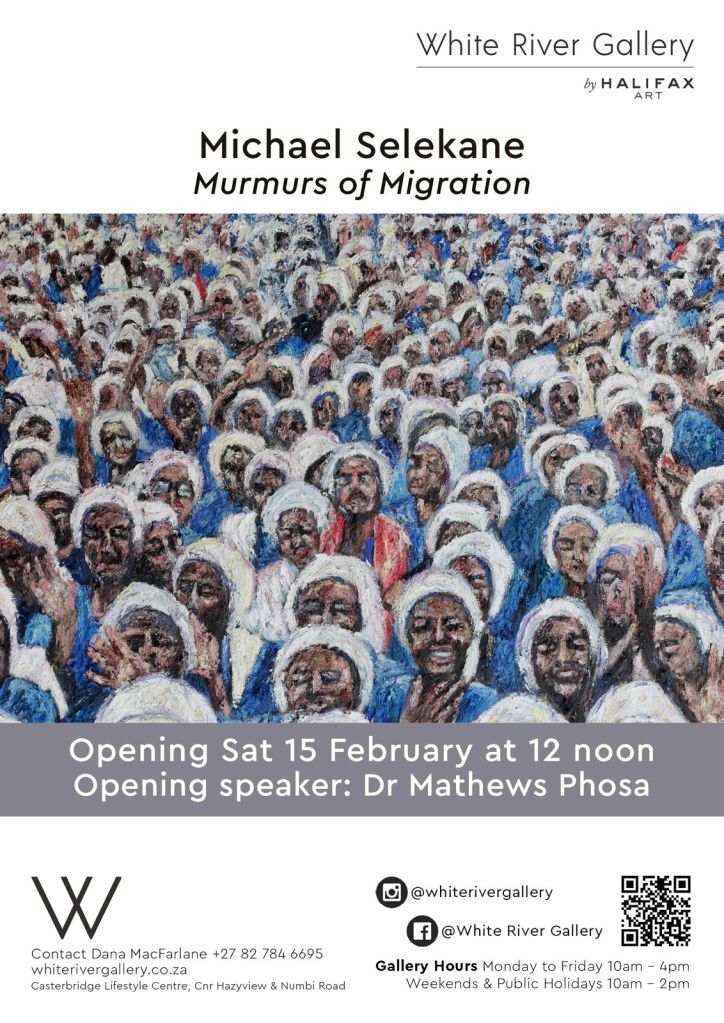
According to the artist, this body of work represents snippets or fragments of memories and scenes as well as impressions of what he experienced as a child. But he has also recalled experiences missed while growing up in Mpumalanga, Uitvlught, and Mabopane through childhood memories shared by peers and friends in creating some of the works in this upcoming exhibition. Ironically, he is silent on indicating which works have been inspired by memories of friends and peers in a few talks we have had during the build-up to this latest exhibition. Besides the fact that he is still working within the figurative realm, it is exactly these memories, flashbacks, murmurs, and visions that seem to hold the work together.
Part of a wave of artists that have fed into a movement from the City of Tshwane to Johannesburg to inhabit, practice and contribute to contemporary South African art, Selekane has proved to be a mainstay in the host of artists regularly exhibiting today in Gauteng and outside of the province. Last year, his work was exhibited in three group exhibitions. Resilience and Reflection, at the Apartheid Museum, Johannesburg. Through the White River Gallery, his work was featured at the Rand Merchant Bank’s Latitudes Art Fair in the exhibition titled Shadowlines and in Echoes of Now at the White River Gallery in Mpumalanga. This latter exhibition, it seems, tilled the field for Murmurs of Migration.
II
Selekane traces his apprenticeship through historically significant artists such as Michael Mmutle, David Phoshoko, Lefifi Tladi and Sello Malebye. He met Malebye, Roy Ndinisa and Aubrey Motlhabi through their short-lived Tshwaraganang Art Giants initiative that offered art-making skills at Mabopane Skills Centre around 2005 when the centre collaborated with the newly formed Ifa Lethu Foundation to develop and promote art education in Mabopane. It was at Mabopane Skills Centre where his contemporaries Thabo Pitso and Percy Maimela initially honed their art-making skills in a formalised context.
In 2008, by then formally associated with the Ifa Lethu Foundation, Selekane enrolled at Tshwane University of Technology Faculty of Art and Design. At TUT he studied painting and printmaking, training under Jan van Der Merwe for painting and for printmaking he had Justice Mokwena. The late Dr Muffin Stevens, Dr. Anne Scheffer and Prof Nalini Moodley-Diar, now Dean of the Faculty of Art and Design at TUT, were responsible for his Art History tutelage.
Presently, it is worth noting that, though still preoccupied with migration as a framework, his new body of work takes a step back to reflect on childhood memories. The difference between the works that he produced earlier compared to his recent work is that he has conjured up scenes that visit part of a personal history he feels he was denied because of his family’s relocation to Mabopane from Uitvlught in the early 1990s when he was just starting his primary schooling.
Relocation came with challenges such as a language barrier to a point wherein the schools that taught Setswana did not accept him and he ended up being enrolled in a XiTsonga medium of instruction primary school. For Selekane this rejection would later find resonance in the way foreign nationals were being treated in our country and would inspire a portfolio he produced in 2008 titled Social Exclusion where he focused on marginalised people due to language, culture and geographical origins whilst lamenting the failure of our government to deliver what was promised in 1994 to South Africans. It is in that portfolio that Selekane’s visual language was solidified.
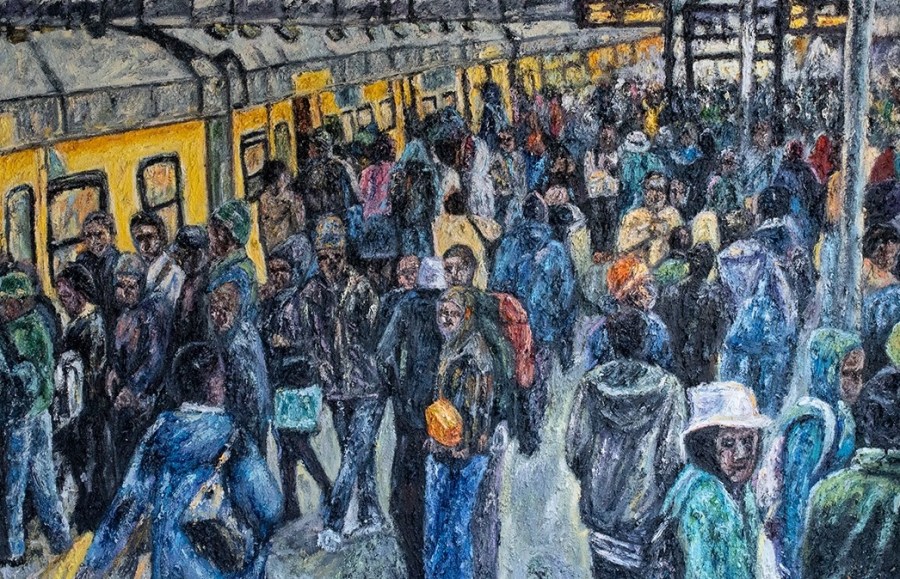
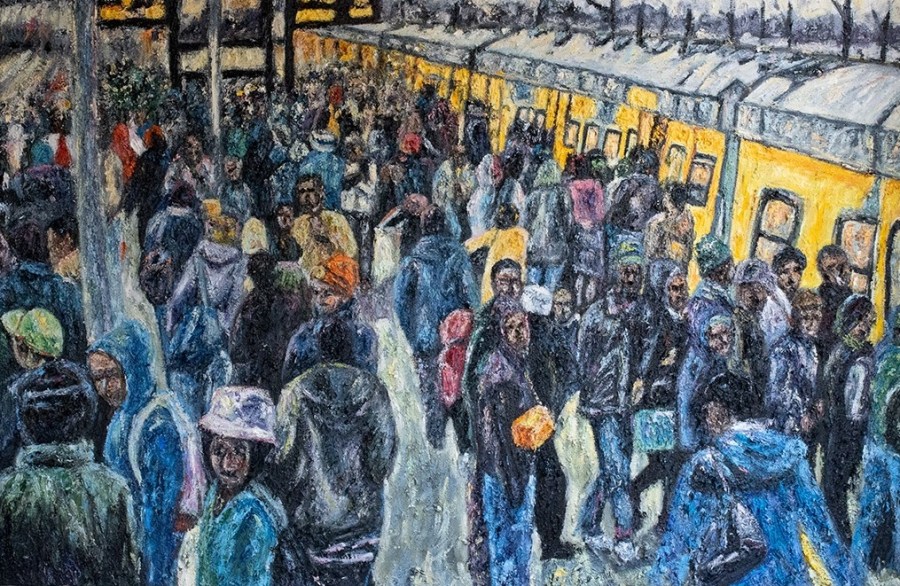
The diptych Rails of Migration (2024) connects earlier Selekane paintings to recent work through its overcrowding composition, strong palette, nuanced lines and thick impasto. In this painting, some of the figures in the crowds boarding or alighting from the trains on either side are aware that they are being watched. The artist points out that in our search for a better life, we are constantly moving from one place to the other. And for the daily commuters either to work or school, this movement is so engrained and naturalised that they seem oblivious to its constant undertaking.
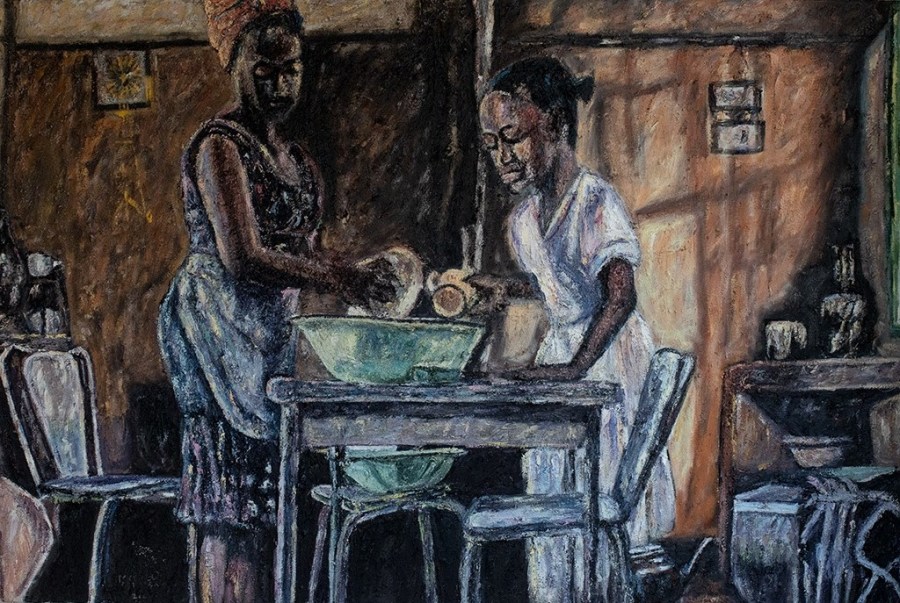
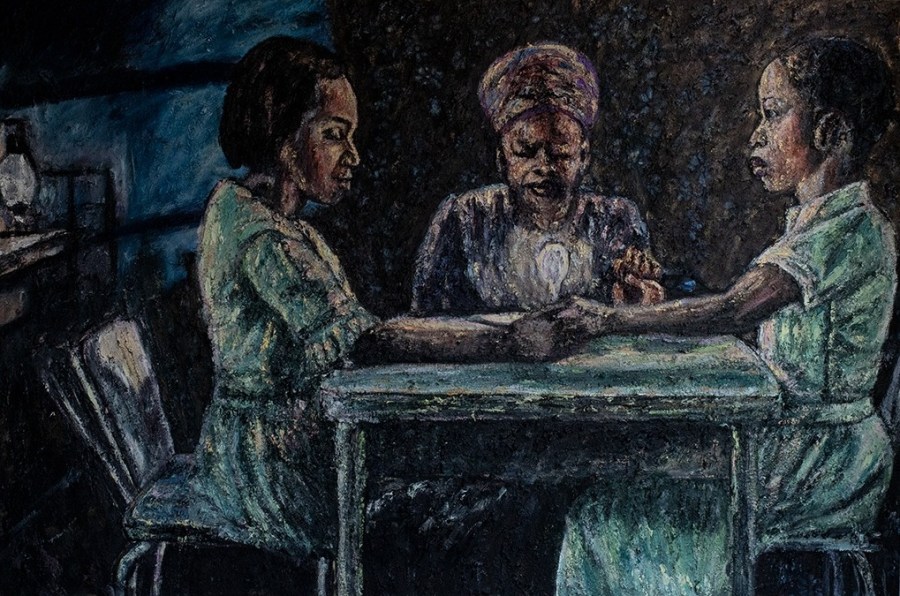
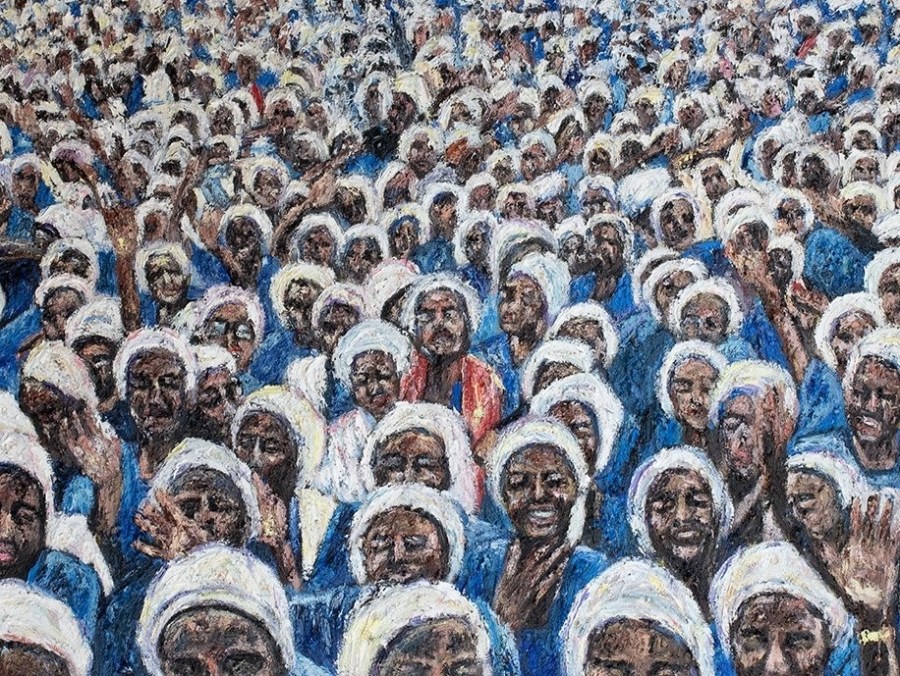
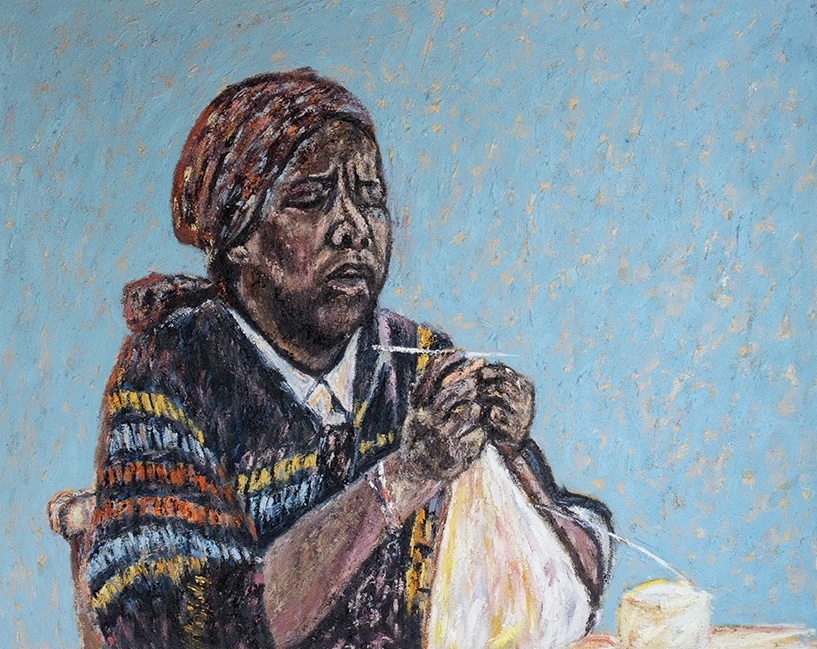
Except for the Passage to Promise (2024) and Kobo ya Sechaba (2024). This is the only work showing a multitude of people among the works selected for the exhibition. The other paintings which will be featured in the exhibition show either two or three people. For instance, in the closely related works, Future Forged (2024) and Lerato la Mme (2024), Selekane comments on house chores as a repertoire of responsibility that a mother can teach to her children and the power of prayer as an expression of love particularly where a parent prays with their children. In both works, there is an element of bonding. The viewer will also notice the different times that the two works have been set in. Light in these settings adds a dramatic effect to the visual narratives inherent in these two paintings.
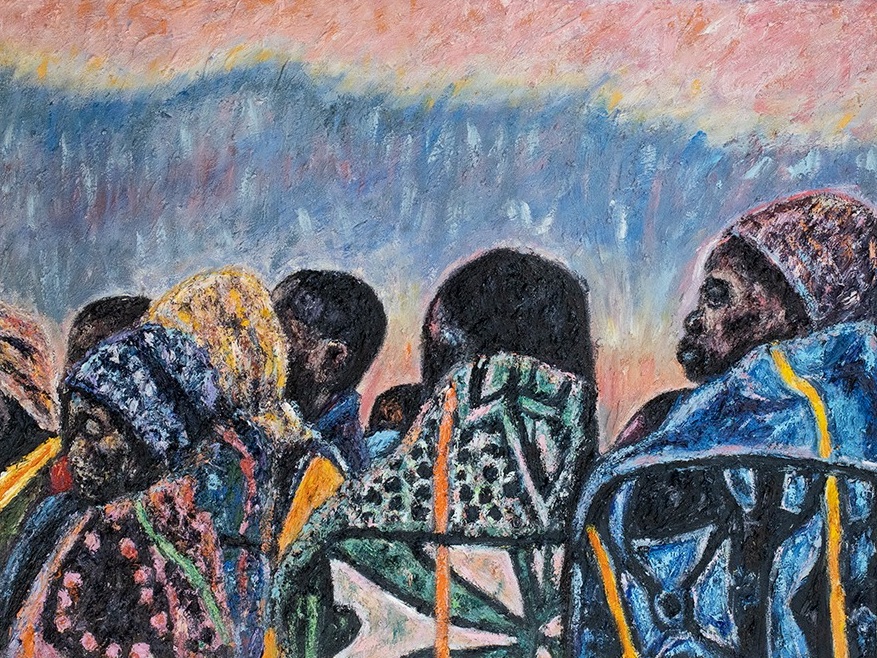

In the work Passage to Promise there is some remoteness in terms of what the artist might be commenting on. The faces of the women depicted are turned away from the viewer, denying a reading of their facial expressions. More of a morning scene than an afternoon draped with coldness. This work connects with Kobo ya Sechaba through its overall subject matter. Both works represent women and in both depictions, they are draped with blankets. But in the latter work, that is Kobo ya Sechaba, the women face the viewer, returning the gaze. The warm sky metaphorically connects with the warmth that the blanket alludes to. Furthermore, through its title, the work suggests the role that women play in nurturing Sechaba, our nation.
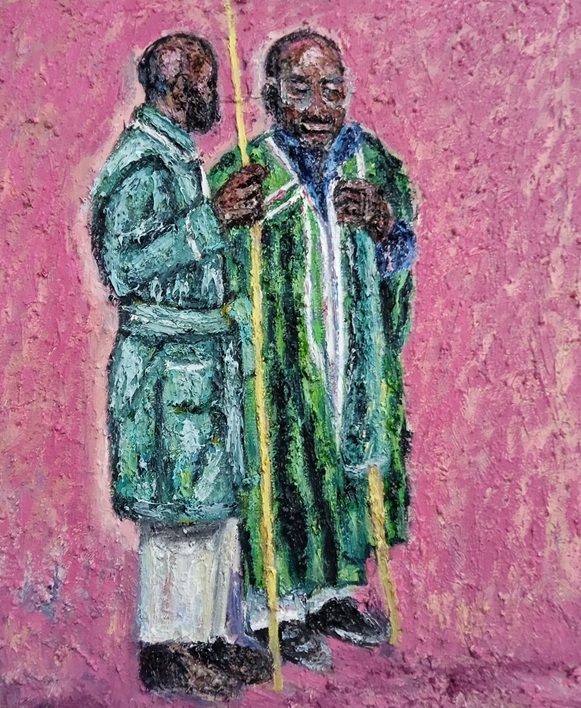
Having made this observation, it is noteworthy to highlight that women dominate Selekane’s pictorial depictions in this new body of work except for a few works that represent men such as Rosy Prediction (2024) which depicts men of the cloth against a pink impressionistic backdrop that echoes Kobo ya Sechaba in terms of its painterly quality approach albeit with a different colour scheme.
III
In 2016, a new horizon seemed to be looming in Tshwane when curator Sara McGee and the renowned South African artist Mbongeni Buthelezi partnered to open a gallery, MB Studios Community, in the heart of the City of Tshwane. The space would later be rebranded M Studio Community. The gallery was opposite the South African Reserve Bank and was about ten minutes away from the South African State Theatre and Sammy Marks Square. What was significant about the location of this new art space was that it was a block in which Capital Collective in partnership with musicians, crafters and designers hosted The Market @ the Sheds event monthly. This event which is still being hosted today pulled creatives, art enthusiasts and those seeking a different vibe in the City of Tshwane a place to unwind. But most importantly it pulled people back to the heart of the city.
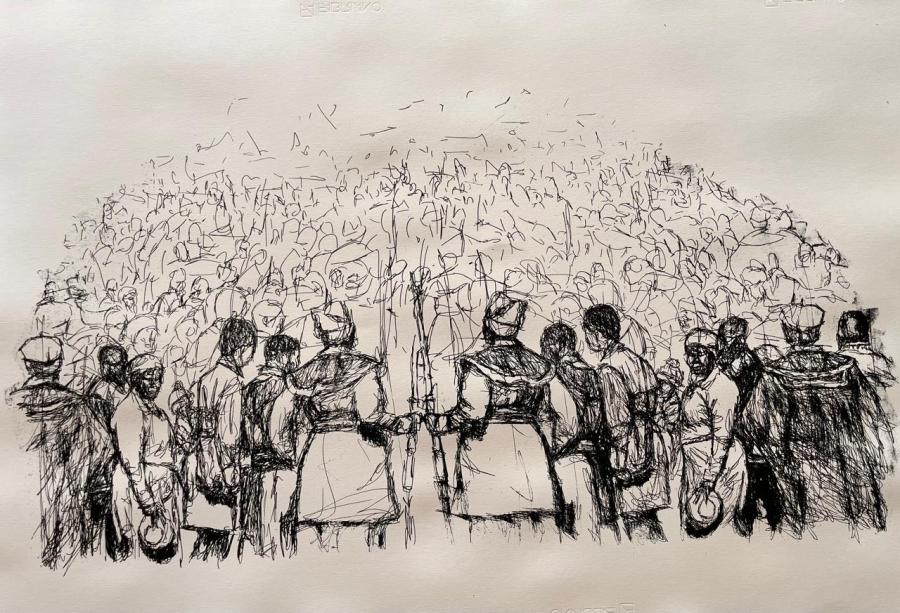
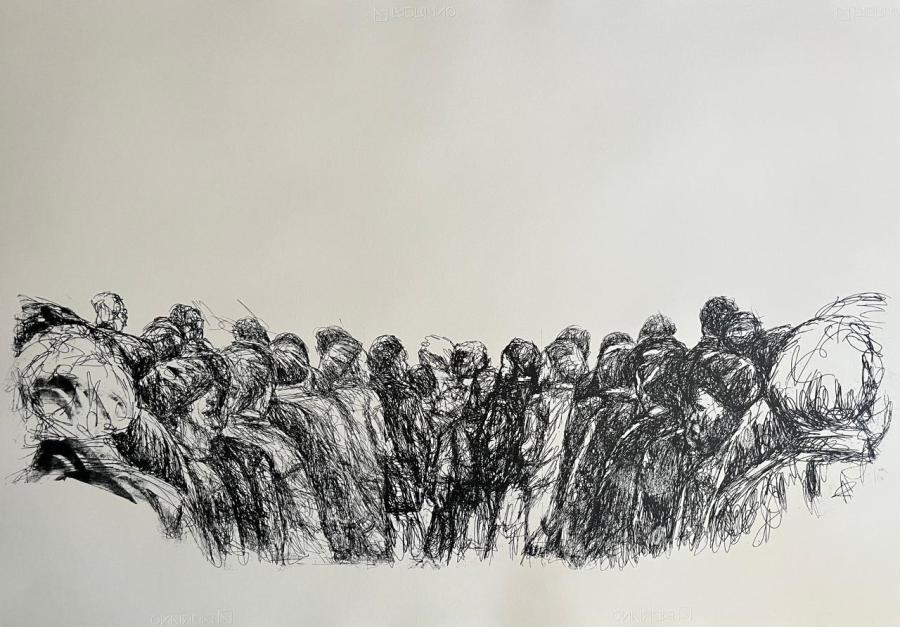
It was at that space during that period which also served as a working space for Selekane that he would unveil a series of prints under a solo exhibition titled Songs of Migration. That exhibition followed closely in the footsteps of Kgomo ya Badimo curated by Simon Radebe and Thabang Monoa held at the Pretoria Art Museum following his art residency under the Kopanong Art Studio Residency Programme in 2015. Whilst producing work for Songs of Migration Selekane was cash-strapped but equipped with a minimum of printmaking materials. He tapped into his printmaking skills and developed a technique wherein he used silk screens to produce etching-woodblock-like prints. The prints which form part of Murmurs of Migration have been produced through this technique.
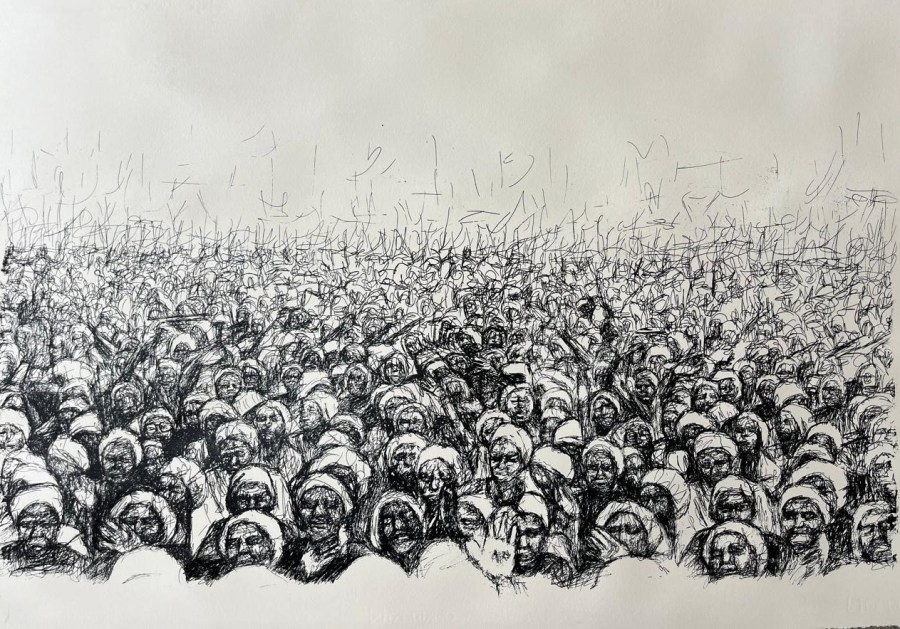
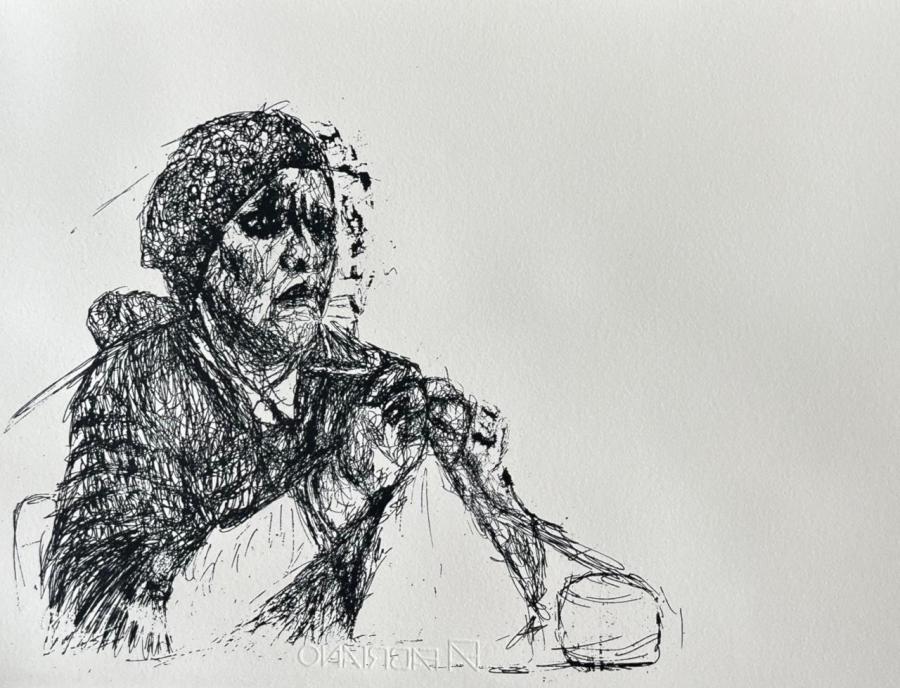
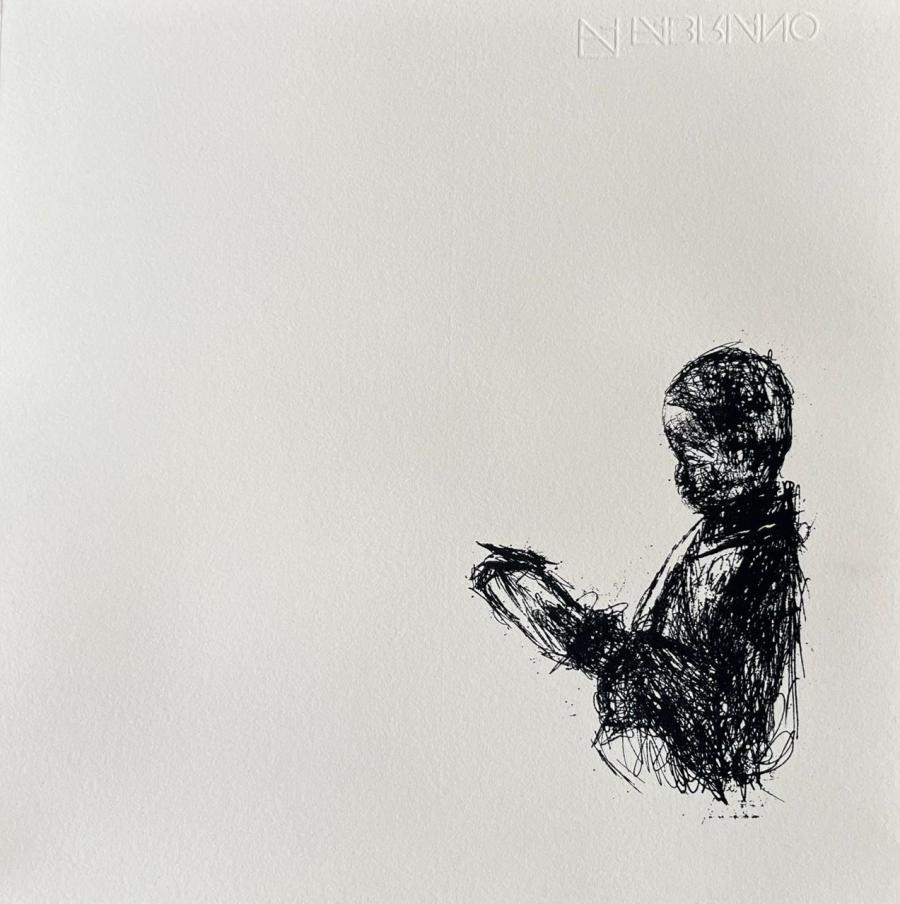
Works such as Global Village (2025), Koko (2025), Tshepo (2025) and Collective Momentum (2025) are part of a collection of prints that complements the paintings featured in this exhibition. Interestingly, the works Global Village and Koko are print versions of two paintings, Kgoaere (2025) and Magogo (2025). A comparative viewing of these sets of works reveals conversant handling of these media in the hands of Selekane. Finally, the work Tshepo can be read as a double entendre for it carries the artist’s middle name as well as referring to ‘trust’ in its literal translation. Collective Momentum reminds the viewer of the collective energy inherent in a community that works together. But what is more here is that it reminds us of an artistic approach that Selekane employs when he conceives his works. The fact that in a considerable number of his works, he creates a mirror image of what is being represented. The mirror image effect is noticeable in works such as Rails of Migration; a painting that I have discussed at the opening of this exposition, as well as in Collective Momentum and Rosy Future (2025).
Conclusion
Selekane’s Murmurs of Migration may refer to migration by its title but to a large extent, what the work is about, is a celebration of women and their role in our multifaceted society. Some of the works featured in this exhibition betray this observation, however, these works, whether paintings or prints carry other concerns that preoccupy the artist such as youth and unity in the community whether social or religious. In its collective communication, Murmurs of Migration seems to implore us to consider another form of migration. Another form of journeying. That is the journey of self-discovery through our interaction with others. This is quite befitting in a world caught up in a whirlpool of abandonment and alienation despite our shared space and time.
Summer
14 February
© mmutle arthur kgokong 2025


 Intraparadox